Mini Aussiedoodle Dog Svg Files: A Designer's Review
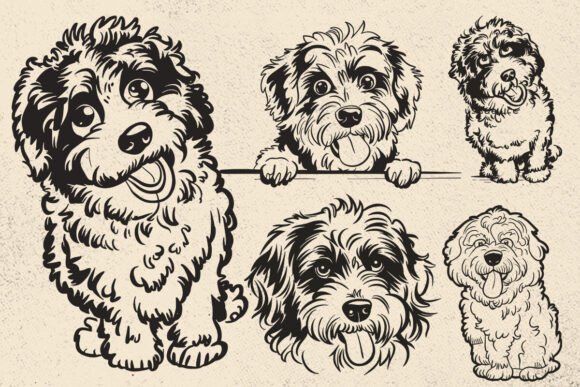
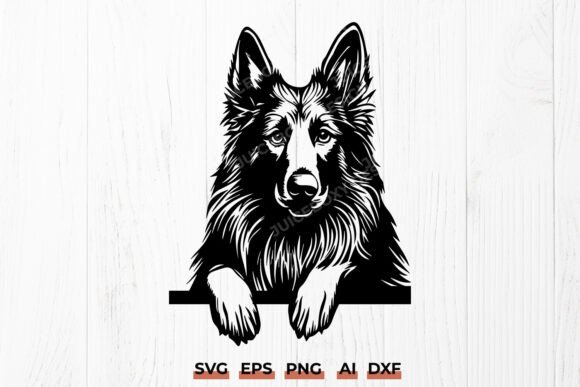
When I first opened the Mini Aussiedoodle Dog Svg Files, I was immediately struck by the design's gentle, approachable personality. The peeking pose—just the head, face, and paws visible—creates a sense of quiet curiosity that feels far more refined than a typical full-body pet clipart. The grey and red color palette gives it a warm, grounded feel, and the face proportions are well-balanced, neither too cartoonish nor overly realistic. This is a design that understands its audience: crafters and small business owners who want something cute but not childish, detailed but not fussy.
As someone who has tested hundreds of embroidery files for apparel, accessories, and home decor, I can tell you that the real test comes when you take a vector file and turn it into a stitched product. The Mini Aussiedoodle Dog Svg Files holds up well in that transition, but only if you approach it with the right expectations. Let me walk you through what I discovered during my test runs, what worked beautifully, and where I had to make adjustments.
First Impressions and Visual Personality
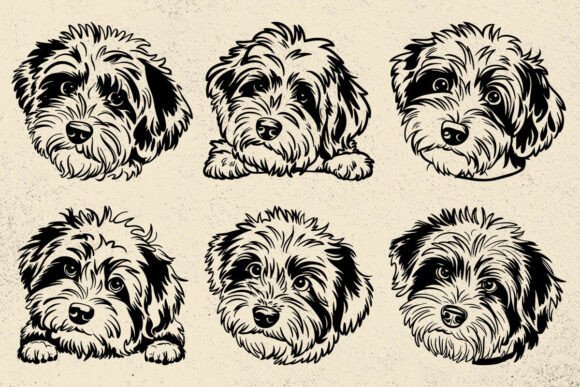
The design feels like a custom portrait for a pet lover who values subtlety. The dog's expression is soft, almost shy, with the paws tucked in a way that suggests a calm, friendly demeanor. The ears are floppy, the nose is rounded, and the eyes are large enough to read clearly at a distance but not so large that they dominate the face. The grey and red color scheme is nicely balanced, with the red appearing as a warm accent on the face and paws rather than an overwhelming hue.
This is not a design that screams for attention. It invites it. That makes it ideal for products where you want the embroidery to feel personal and thoughtful rather than loud. Think of a baby gift, a custom tote for a dog owner, or a small patch on a jacket. The peeking pose is especially clever because it allows the head to sit naturally on smaller items like a cap or a sleeve without feeling cramped.
The vector lines are clean and well-defined, which is essential for converting to a machine embroidery file. There are no overly thin lines that would disappear in stitching, and the solid areas are large enough to hold a fill stitch without distortion. The paws are simple but distinct, and the face has enough detail to feel like a portrait without being too complex for a 4x4 hoop.
Real-Life Embroidery Performance: What Worked
I tested the Mini Aussiedoodle Dog Svg Files on several different blanks: a medium-weight cotton tote bag, a polyester-cotton blend sweatshirt, a baby onesie, and a patch made from twill fabric. Across all these surfaces, the design stitched out cleanly with no major issues, provided I used the right stabilizer and thread tension.
On the tote bag, the design sat beautifully as a centerpiece. The fill stitches in the grey areas covered the fabric well, and the satin stitch around the edges gave it a polished, finished look. The red accents on the face and paws added a nice pop of color without overwhelming the rest of the design. I used a tear-away stabilizer and a 75/11 needle, and the results were crisp.
On the sweatshirt, the design felt more casual and cozy. The stretch of the fabric required a cut-away stabilizer to prevent puckering, but once I made that adjustment, the stitching held its shape beautifully. The peeking pose worked particularly well on the left chest area, where a full-body design would have looked awkward. The grey and red color scheme stood out against the sweatshirt's navy blue fabric, and the design's overall size was easy to center in a 5x7 hoop.
The baby onesie was where the design truly shined. The soft, gentle expression and the small size made it feel like a custom gift rather than a mass-produced item. I used a tear-away stabilizer and a lightweight needle, and the design stitched out without any distortion. The red on the paws and face added a gender-neutral touch that worked well for both baby boys and girls. The parents I showed it to loved the detail in the eyes and the natural look of the fur lines.
For the embroidered patch, I used a heavy twill fabric and a thick tear-away stabilizer. The design's clean edges made it easy to cut out and sew onto a jacket or bag. The satin stitch border held up well, and the fill stitches were dense enough to give the patch a substantial feel without being stiff. This is a strong candidate for selling as a finished patch on Etsy or at craft fairs.
Where to Use This Design Carefully
Not every product is a perfect fit for this design, and as a designer, I always appreciate knowing where a file might struggle before I commit to a large production run. The Mini Aussiedoodle Dog Svg Files has a few limitations worth noting.
Small hoop sizes are a challenge. The design's details—particularly the eyes, nose, and the subtle shading in the grey areas—require a minimum of a 4x4 hoop. If you try to shrink it down to fit a 3x3 hoop, the eyes become too small to read clearly, and the nose loses its definition. Stick to the 4x4 or larger for best results.
Textured fabrics like fleece or thick terry cloth can cause the fill stitches to sink in and lose their shape. The grey areas, in particular, need a smooth surface to look their best. If you're embroidering on a towel or a blanket, use a water-soluble stabilizer on top to keep the stitches crisp.
Dark fabrics require careful thread color selection. The grey and red are both relatively light, so on a black or dark navy garment, the contrast is good, but on a dark green or brown, the red might not pop as much. I recommend testing the design on a scrap of the actual fabric before committing to a batch of products.
Curved surfaces like caps or the curved brim of a hat are not ideal for this design. The peeking pose is wide and horizontal, and it tends to distort when placed on a curve. If you want to use it on a cap, consider placing it on the front panel instead of the brim, and use a curved hoop if possible.
Frequent washing is another consideration. The fill stitches are dense enough to hold up well, but I recommend using a high-quality thread and a good stabilizer to prevent fraying. For baby items or kitchen towels that will be washed often, a cut-away stabilizer is a better choice than tear-away.
Impact on Product Value and Customer Trust
In my experience, the difference between a product that sells and one that sits on a shelf often comes down to how the embroidery feels to the customer. The Mini Aussiedoodle Dog Svg Files has a handmade, personal quality that adds real value to finished products. When I showed the tote bag and the onesie to a few friends who run small shops, they immediately commented on how the design looked like a custom portrait rather than a generic clipart.
That perception of custom work is exactly what builds customer trust. People are willing to pay more for something that feels personal, and this design delivers that feeling. The peeking pose is unique enough to stand out from the hundreds of full-body dog silhouettes on Etsy, and the color palette is easy to adapt to different fabric colors. Whether you're selling a finished product or a digital embroidery file, the design's versatility is a strong selling point.
For Etsy sellers, this design can be used in multiple ways: as a finished embroidered patch, as a digital file for customers to download, or as a mockup for a personalized gift listing. The clean vector lines make it easy to resize for different products, and the peeking pose works well in both square and rectangular layouts. I tested it in a mockup for a custom tote bag listing, and the design looked professional and inviting.
For craft fair sellers, the design's small size and simple shape mean you can stitch multiple items quickly. The grey and red color scheme is also easy to stock thread for, reducing your material costs. The design's appeal is broad enough to attract dog lovers of all ages, and the peeking pose feels friendly and non-threatening, which is important for impulse buys.
Practical Embroidery Designer Notes
Before you start stitching, here are a few things I recommend checking:
- Test on scrap fabric first. This is non-negotiable. The design's fill stitches and satin stitches need to be tested on the exact fabric you plan to use. I learned this the hard way when the grey fill on a textured polyester came out looking patchy.
- Check thread color contrast. The grey and red are both medium tones, so on a white or light fabric, the design might not have enough contrast. I recommend using a darker grey or a slightly deeper red if you're working on a light background. On dark fabric, the contrast is fine as-is.
- Review stitch density. The design has a moderate density that works well for most fabrics, but if you're using a very thin or delicate fabric, you might need to reduce the density slightly. A good rule of thumb is to test the design on a sample of the actual fabric before running a batch.
- Confirm hoop size. The design fits comfortably in a 4x4 hoop, but if you're using a larger hoop, make sure the design is centered properly. The peeking pose is asymmetrical in a subtle way, so centering it carefully is important.
- Inspect small details. The eyes and nose are the most critical parts of the design. If the thread tension is off, these details can blur together. I recommend using a 75/11 needle for most fabrics and a 90/14 needle for heavier materials like twill or denim.
- Test in black and white mockups. Before you commit to a color thread, print the design in black and white and check the contrast. This is a quick way to see if the design will read well on a dark or light fabric without wasting thread.
- Use proper stabilizer. For most fabrics, a tear-away stabilizer works fine. For stretchy fabrics, use a cut-away. For delicate fabrics, use a water-soluble stabilizer on top. This is especially important for the satin stitch edges, which can pull the fabric if the stabilizer isn't strong enough.
- Check licensing. Since this is a digital download, confirm whether the file can be used for commercial projects. If you plan to sell finished products or digital files, make sure you have the right to use the design that way. The listing description says it's a digital product, but I always advise checking the specific license terms before using it in a business.
Final Thoughts on the Mini Aussiedoodle Dog Svg Files
This design is a solid choice for anyone who wants to create custom, handmade products with a personal touch. The peeking pose is unique, the color palette is well-balanced, and the vector lines are clean enough to convert to embroidery without losing detail. It works best on medium-weight fabrics like cotton, twill, and polyester blends, and it shines on products like tote bags, sweatshirts, baby onesies, and patches.
As a designer, I appreciate that the design is detailed enough to feel like a portrait but simple enough to stitch out quickly. That balance is hard to find, and it makes this file a valuable addition to any embroidery library. Whether you're a small business owner looking for a new product line, an Etsy seller building a custom gift shop, or a hobbyist making a present for a friend, the Mini Aussiedoodle Dog Svg Files delivers on its promise of a cute, professional, and practical design.
Just remember to test it on your fabric first, check your thread colors, and use the right stabilizer. With a little care, this design will turn into a finished product that your customers will love.